

Offices & Achievements
GOVERNOR OF KADUNA STATE
(2015–2023)
Offices & Achievements
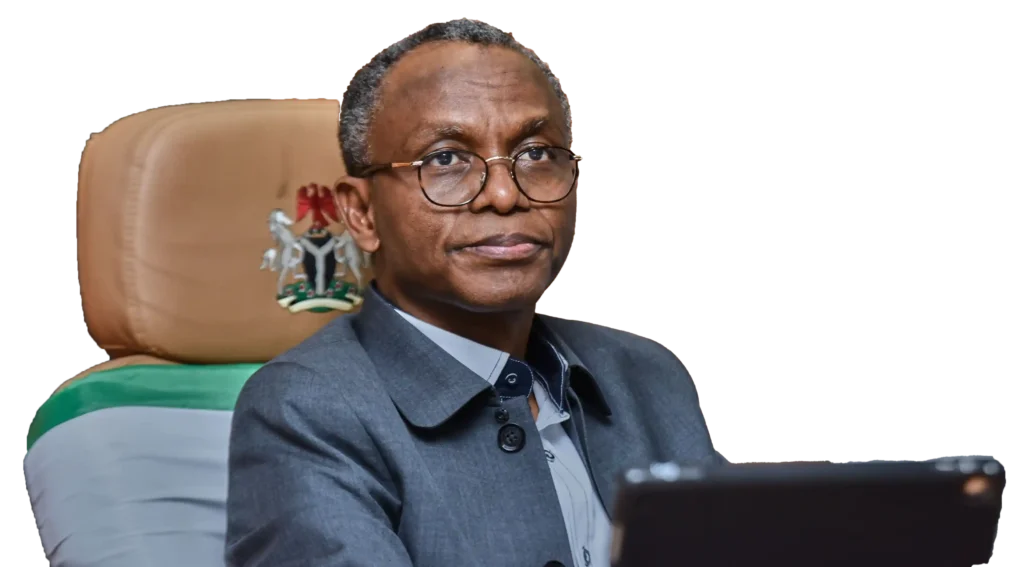
Governor of Kaduna State, May 29, 2015 – May 29, 2023
Mallam Nasir El-Rufai assumed leadership of Kaduna State on 29 May 2015 at a moment of severe institutional decline: weak revenue, an overstretched and inefficient bureaucracy, crumbling education and health systems, rising insecurity, and a largely unresponsive public sector. From the outset his administration adopted a rigorously data-driven and reform-led approach, prioritising fiscal discipline, digitisation, infrastructure renewal, fundamental reforms in education and healthcare, transparency in governance, and the professionalisation of the civil service.
Over the course of eight transformative years, he executed these reforms with consistency and measurable impact. Kaduna under his leadership evolved into a standout model of sub-national reform in Nigeria, drawing national and international attention for its practical innovations in governance, service delivery and security coordination.

KEY AREAS OF IMPACT
Fiscal Reform & Governance Modernisation
When Mallam Nasir El-Rufai assumed office in May 2015, Kaduna State was fiscally constrained, with revenues barely sufficient to cover salaries and overheads. The state’s Internally Generated Revenue (IGR) stood at a meagre ₦11 billion, and public funds were fragmented across opaque accounts. The civil service was bloated, unproductive, and structured for patronage rather than performance. Ministries overlapped in function, and budget processes were erratic and disconnected from execution.
El-Rufai’s view was simple but radical for the time: no meaningful reform could begin without fiscal control and institutional efficiency. He believed that a government must first fix its own systems before it could credibly transform schools, hospitals, or roads. His approach fused technology, transparency, and a fierce commitment to eliminating waste.
What He Did
- Introduced the Treasury Single Account (TSA), centralising all government revenues into a unified, trackable system — shutting down the leakages of multiple accounts.
- Slashed ministries from 19 to 13, and reduced Permanent Secretaries from 35 to 18 — eliminating duplication and making room for clearer lines of responsibility.
- Insisted on timely budget processes — with Kaduna consistently becoming one of the first Nigerian states to pass and publish its budget annually.
- Redesigned the budget to align with sectoral priorities — ensuring that infrastructure, education, and health received the bulk of funding.
- Pushed for revenue reform, leading to a fivefold increase in IGR — rising from ₦11 billion in 2015 to over ₦52 billion by 2021, driven by improved collections, digital systems, and expanding the tax base.
Impact on Citizens
- Freed public funds for massive infrastructure investment and social services without resorting to unsustainable debt.
- Eliminated duplication and waste, ensuring faster, more accountable service delivery.
- Reduced political interference in public finance, strengthening investor and donor confidence.
- Created a culture of budgeting with purpose — where policy was aligned with public spending, and results became measurable.
Education Reform
In 2015, when Nasir El-Rufai took office, the education system in Kaduna State was in quiet collapse. Classrooms were overcrowded, infrastructure was broken, and, most critically, the majority of public school teachers lacked the basic qualifications to teach. Learning outcomes were poor, and confidence in public education had eroded — especially among low-income families who could least afford alternatives.
For El-Rufai, this was not just a policy failure — it was a social emergency. He believed that no society could lift itself out of poverty if its children could not read, write, or compete in the future economy. His thinking was direct: fix education at the foundational level, and you change the long-term destiny of the state. But that required a break from convention — and the political courage to make hard decisions.
What He Did
- Administered competency tests to over 30,000 teachers — and controversially dismissed more than 22,000 who failed to meet minimum standards.
- Recruited over 25,000 certified and tested teachers through a transparent, merit-based process — prioritising qualifications, subject knowledge, and teaching capacity.
- Made primary and junior secondary education free and compulsory, removing financial barriers for poor families.
- Launched a state-wide School Feeding Programme, providing daily meals to 1.5 million pupils — the largest sub-national programme of its kind in Nigeria.
- Renovated over 5,000 classrooms and supplied schools with furniture, textbooks, and learning aids to improve the teaching and learning environment.
Impact on Citizens
- Raised the quality of instruction in public schools — restoring confidence in the system.
- Increased school enrolment and retention, especially among girls and children in rural areas.
- Relieved poor families of education-related costs, expanding access for the most vulnerable.
- Laid the groundwork for improved literacy and learning outcomes that would echo for generations.
Healthcare Transformation
When El-Rufai took office in 2015, Kaduna’s public health system was defined by absence — of personnel, equipment, drugs, and access. Most communities, particularly in rural areas, had no functioning primary health facility within reach. Hospitals were under-resourced, health workers were poorly trained, and preventable diseases remained leading causes of death. For pregnant women and children, a lack of emergency response often meant tragedy.
El-Rufai approached the crisis with the mindset of a systems reformer, not just a service provider. He believed that healthcare must be decentralised, data-informed, and technology-supported — with primary healthcare as the cornerstone. His goal was ambitious: bring healthcare to the doorstep of every ward, professionalise the workforce, and use innovation to close gaps in care.
What He Did
- Upgraded 255 Primary Health Centres — one in each ward — with solar power, essential equipment, and trained personnel, ensuring that no ward was left behind.
- Constructed a pharmagrade central warehouse to overhaul the drug distribution system and eliminate stock-outs and expired medications.
- Partnered with Zipline to launch Africa’s first drone-powered medical logistics service at the state level — delivering vaccines, blood, and critical medications to remote areas in minutes.
- Trained over 3,000 health workers, including midwives, community health extension workers, and technicians — and improved conditions in general hospitals.
- Digitised parts of the healthcare system, improving inventory tracking, health records, and supply chain transparency.
Impact on Citizens
- Brought healthcare access within reach of rural and underserved communities — dramatically reducing travel time and mortality rates.
- Enabled rapid emergency response in maternal care, child illness, and epidemics through the Zipline drone network.
- Increased trust in the public health system, particularly for immunisation and child health services.
- Created a more accountable, supply-driven health system that replaced guesswork with logistics and planning.
Security & Peace-building
By 2015, Kaduna State was increasingly defined by insecurity — from farmer-herder clashes and sectarian violence in Southern Kaduna to kidnapping and rural banditry in the central and northern zones. Security response was fragmented and reactive, with the state largely dependent on overstretched federal agencies. Data on violence was anecdotal, trust between communities was fraying, and the absence of a coordinated state security strategy made lasting peace elusive.
El-Rufai believed that security must be treated as a function of governance, not just enforcement. He was clear that the state had both a moral and constitutional duty to protect lives and property, even when direct control over security agencies was limited. His strategy was to build institutional capacity, improve intelligence, and restore trust through transparency and local engagement.
What He Did
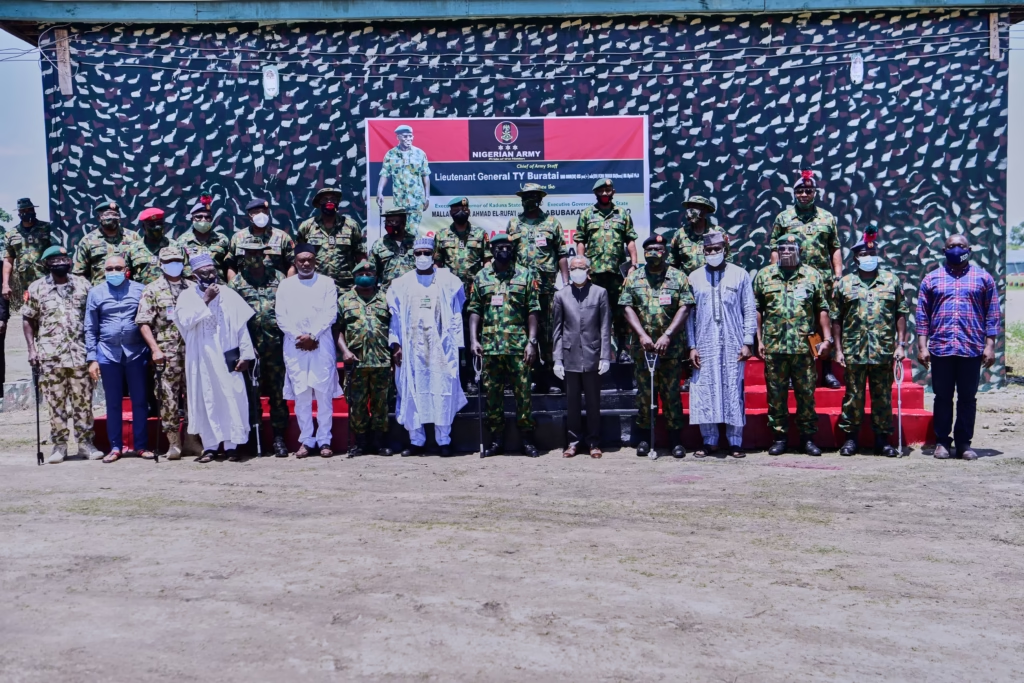
- Established the Ministry of Internal Security and Home Affairs — the first of its kind in Northern Nigeria — to coordinate state-level responses, security planning, and crisis management.
- Instituted quarterly public Security Reports, offering transparent data on incidents, trends, and government actions — creating one of the most accountable security tracking systems in Nigeria.
- Brokered the Kafanchan Peace Declaration (2016) — a historic agreement between warring communities in Southern Kaduna, laying a framework for grassroots reconciliation.
- Integrated traditional rulers, religious leaders, and community actors into the State Security Council — expanding intelligence networks and deepening local cooperation.
- Supported federal security agencies with vehicles, communications equipment, and logistics to strengthen on-the-ground response capacity.
Impact on Citizens
- Improved coordination and focus on local security threats, with the state actively shaping its own security agenda.
- Increased public transparency around violence and state action — reducing misinformation and panic.
- Rebuilt peace architectures in conflict-prone communities, giving citizens a voice in their own safety.
- Strengthened early warning and intelligence mechanisms, enabling faster, more targeted interventions.
Infrastructure Development & Urban Renewal
When El-Rufai assumed office, the physical state of Kaduna’s cities and rural areas told a story of long-term neglect. Roads were potholed or non-existent, drainage systems had collapsed, and public spaces — parks, markets, squares — were either decaying or unregulated. Urban growth was unmanaged, sprawling slums were expanding, and basic municipal planning tools were missing.
El-Rufai saw infrastructure not just as construction, but as a tool for order, equity, and opportunity. He believed that modern cities should be livable, competitive, and dignified — and that rural communities should not be excluded from the dividends of development. His vision: rebuild Kaduna’s urban centers as models of functionality, and extend roads, housing, and public services to the farthest corners of the state.
What He Did
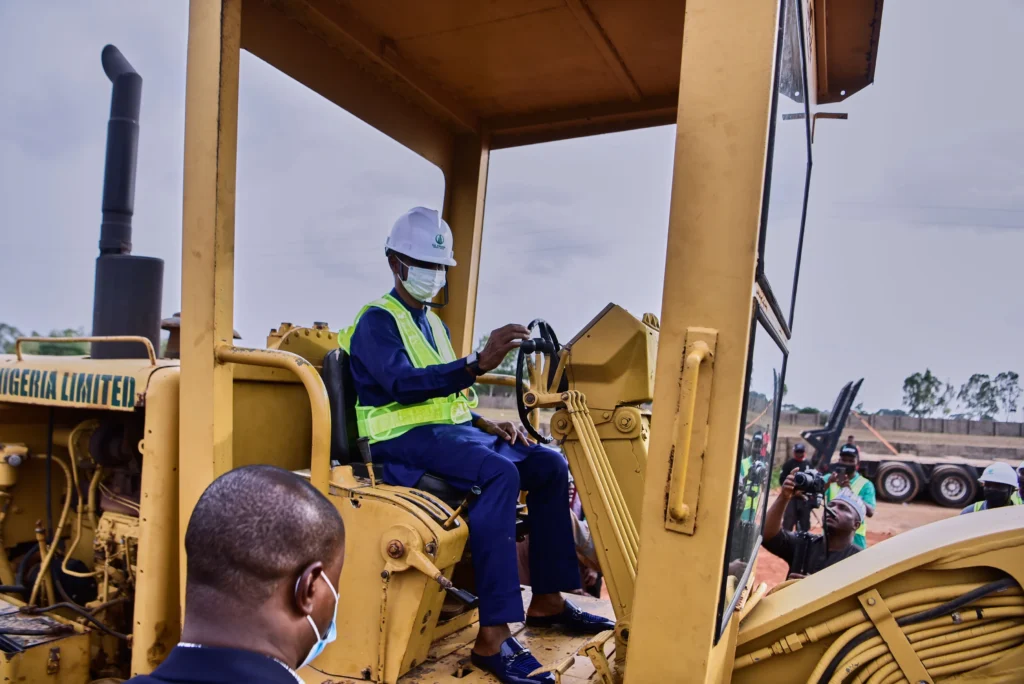
- Constructed over 700 kilometers of roads — linking communities, towns, and economic corridors across all 23 local governments.
- Launched a statewide Urban Renewal Programme — modernising the cityscapes of Kaduna, Zaria, and Kafanchan with new roads, flyovers, markets, drainages, parks, and hospitals.
- Redeveloped Murtala Mohammed Square — transforming it into a multifunctional civic space, integrating leisure, commerce, and sport.
- Built thousands of low-cost housing units across Kaduna metropolis and satellite towns, aimed at middle- and low-income earners.
- Laid out new development plans, supported by digital mapping and land-use data, to guide future city growth with sustainability and inclusivity.
Impact on Citizens
- Improved mobility, reduced travel time, and boosted commerce across key routes.
- Elevated urban aesthetics and functionality, creating pride and purpose in public spaces.
- Stimulated private sector real estate and construction activity, driving jobs and local investment.
- Provided affordable housing alternatives, curbing slum expansion and improving quality of life.
Digital Governance & E-Government
In 2015, the Kaduna State government was operating largely on paper. Land records were manual and prone to loss or manipulation, tax processes were opaque and inconvenient, and public services often required face-to-face interaction — creating opportunities for delay, corruption, and inefficiency. For businesses and citizens alike, engaging with government processes was slow, frustrating, and unpredictable.
El-Rufai viewed digitisation not as a convenience, but as a governance necessity. He believed that transparency, accountability, and efficiency could only be sustained through systems that minimized human discretion. His aim was to automate government, eliminate gatekeepers, and make service delivery predictable and accessible.
What He Did
- Digitised the entire land administration system through the creation of the Kaduna Geographic Information Service (KADGIS) — introducing a modern, GIS-based digital land registry.
- Launched KADIRS (Kaduna Internal Revenue Service) — a fully automated, tech-driven tax agency that streamlined revenue collection and improved compliance.
- Introduced online portals for permits, business licenses, tax filing, and public reports — drastically reducing time and cost of interacting with government.
- Standardised and digitised processes across ministries, ensuring that public-facing services followed the same transparent, trackable procedures.
Impact on Citizens
- Faster and more reliable access to land titles, permits, and official documents — with fewer opportunities for extortion or delay.
- Boosted public confidence in state services, as processes became transparent, traceable, and consistent.
- Increased revenue efficiency while reducing the burden on taxpayers and business owners.
- Created the foundation for a digital public service — a modern bureaucracy fit for a 21st-century economy.
Investment, Industry & Economic Growth
In 2015, Kaduna’s economy was still heavily reliant on federal allocations, with limited private investment and a weak industrial base. Agricultural value chains were fragmented, industrial zones were underdeveloped, and many global investors viewed subnational Nigeria as too risky or uncoordinated to engage. The state lacked a clear investment narrative — or the infrastructure and incentives to attract sustained economic interest.
El-Rufai saw economic growth not as a by-product of governance, but as a central obligation of leadership. He believed that only a vibrant private sector could absorb the state’s youth bulge, diversify revenue, and unlock long-term prosperity. His strategy was deliberate: position Kaduna as the most investor-ready state in Nigeria — by de-risking investment, showcasing reforms, and aggressively pursuing partnerships.
What He Did
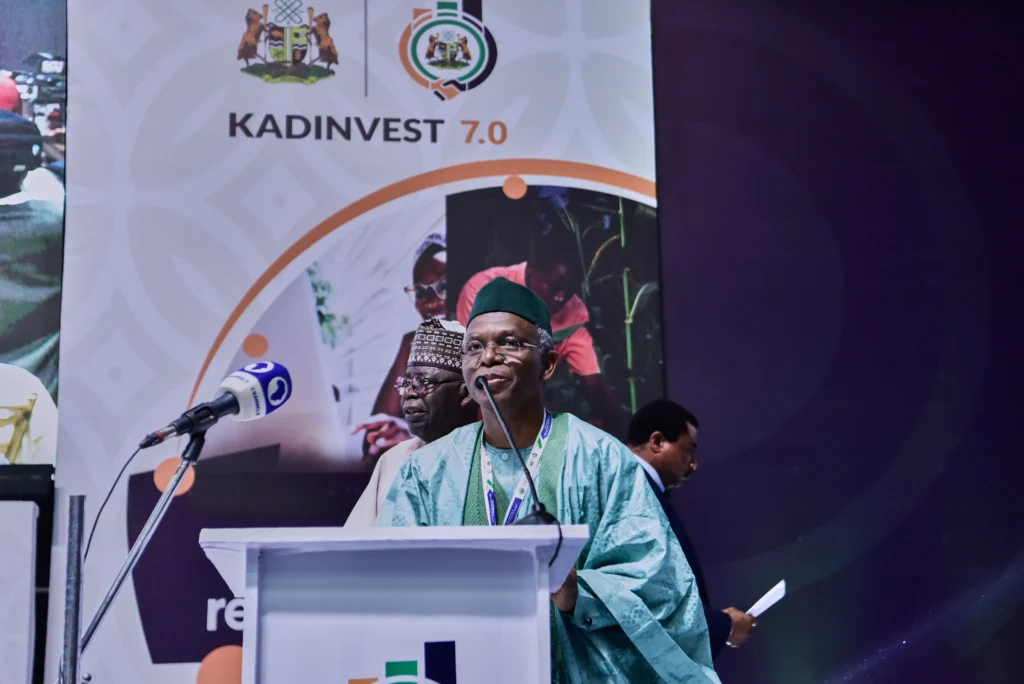
- Launched and institutionalised the Kaduna Economic and Investment Summit (KADINVEST) — an annual showcase of state reforms, project pipelines, and private sector opportunities, attracting global and local players.
- Attracted landmark investments from firms such as Olam Group (₦150 billion integrated agri-facility), BUA Group, Zipline, MTN, Mahindra & Mahindra, and Peugeot Automobile Nigeria.
- Established Kaduna Industrial City, Green Economic Zones, and agro-processing hubs — paired with strategic infrastructure investments to link farms to factories and exports.
- Developed road networks and power access to industrial corridors, ensuring logistics and utility readiness for large-scale enterprises.
- Simplified business regulations and land acquisition, improving Kaduna’s standing in the Ease of Doing Business rankings.
Impact on Citizens
- Created thousands of new jobs, directly in factories and indirectly across supply chains, logistics, and services.
- Shifted the economy from public spending to private investment, diversifying income sources and reducing dependence on oil allocations.
- Strengthened rural economic inclusion, as farmers gained access to processing, markets, and support infrastructure.
- Repositioned Kaduna as a credible destination for foreign direct investment, setting a subnational precedent across Nigeria.
Housing & Urban Planning
Before 2015, Kaduna’s urban expansion was largely unmanaged. Housing development lagged far behind population growth, leading to overcrowded neighborhoods, unregulated structures, and a rise in informal settlements. Urban planning agencies were weak or compromised, and the process for obtaining land or building permits was opaque, slow, and riddled with middlemen.
El-Rufai understood that order in cities begins with regulation, but must be sustained through affordability and access. He believed that safe, planned, and dignified housing should not be a privilege, but a baseline for functional societies. His approach combined regulatory reform, public-private development, and digitised systems to make urban growth both humane and economically productive.
What He Did
- Constructed thousands of affordable housing units across Kaduna metropolis and satellite towns — targeting middle- and low-income households.
- Strengthened the Kaduna State Urban Planning and Development Authority (KASUPDA) — turning it into a professional enforcement body that could regulate land use, enforce setbacks, and guide development.
- Digitised the building permit and land use approval process, enabling transparent, time-bound, and trackable applications — reducing corruption and speculative bottlenecks.
- Integrated housing development into the wider Urban Renewal Programme, ensuring homes were built alongside infrastructure like roads, water, and drainage.
Impact on Citizens
- Expanded access to dignified, affordable housing, especially for civil servants, young families, and first-time homeowners.
- Reduced the spread of informal settlements, improving urban health, safety, and aesthetics.
- Boosted real estate investment and construction-sector employment, with developers benefiting from clearer rules and faster approvals.
- Enabled better city planning, making urban centres more liveable, environmentally sustainable, and economically functional.
Civil Service & Human Capital Development
In 2015, Kaduna’s civil service was large but lethargic — plagued by inefficiency, poor morale, and a patronage-driven structure. Ghost workers inflated the wage bill, promotions were often arbitrary, and training was minimal or outdated. The government machinery lacked both the technical capacity and ethical foundation to drive serious reform or deliver services with consistency.
El-Rufai believed that no reform could succeed unless the people tasked with implementing it were competent, motivated, and accountable. He treated civil service reform as nation-building — an opportunity to replace entitlement with merit and make government a place where talent mattered more than connections.
What He Did
- Conducted biometric verification across the public workforce, removing thousands of ghost workers and cleaning up payroll records.
- Introduced transparent, merit-based recruitment and promotion policies, ensuring that appointments were based on qualifications and performance.
- Established a Leadership Development Centre and Public Service Academy — offering training, mentorship, and modern administrative skills to public servants.
- Sponsored over 2,000 young people for global fellowships, technical certifications, and entrepreneurship programmes — creating a pipeline of future leaders.
- Streamlined HR processes and embedded digital systems into recruitment, evaluations, and workflow across ministries and agencies.
Impact on Citizens
- Built a leaner, more professional public service, capable of driving policy and delivering public services with integrity and efficiency.
- Reduced waste and payroll fraud, freeing up resources for priority programmes.
- Created new pathways for skilled youth to enter public service, shifting perceptions of government from static to aspirational.
- Strengthened the implementation capacity of government, ensuring that reforms were not just announced but executed.