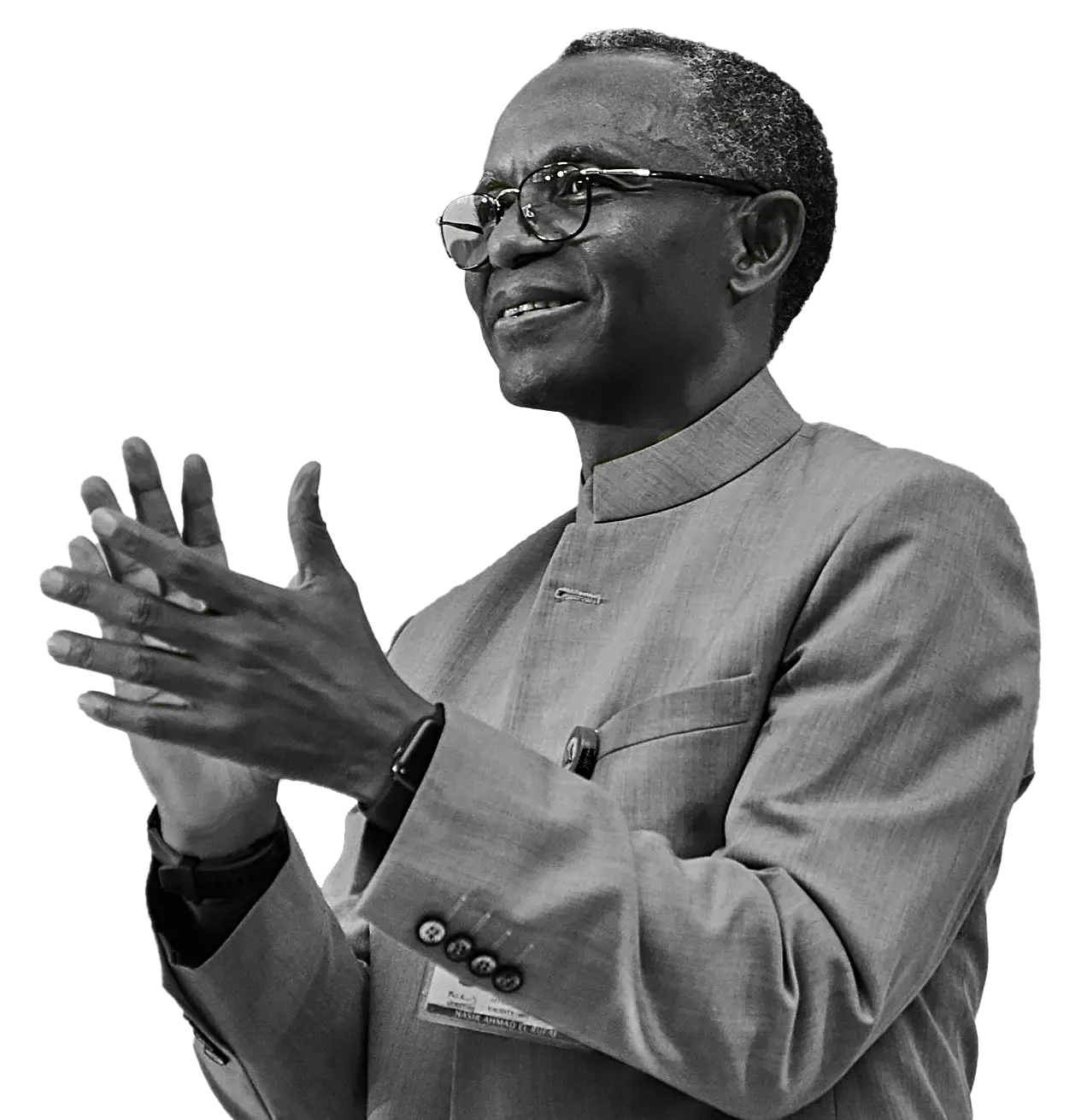
Mallam Nasir Ahmad El-Rufai, CON

A Life of Service, Reform, and Vision

Born on 16 February 1960, Malam Nasir El-Rufai earned first-class honors in Quantity Surveying from the Ahmadu Bello University in 1980. In 1982, shortly after his return to Kaduna following his NYSC in Abeokuta, he founded El-Rufai & Partners, a foremost Quan ty Surveying consultancy firm, and he came into prominence as a leader in his professional field while also investing in the future of young people by teaching part-time in ABU, his alma mater. Not only did he run a successful business, El-Rufai also acquired an MBA and sufficient training in computer science to enable him to become one of the first investors in the Internet Service Provision sector in Nigeria.

The breadth of El-Rufai’s knowledge, his broad mind, the clarity of his analysis and his competence soon brought him to the attention of General Abdulsalam Abubakar, who in 1998 appointed him to the Policy Implementation and Monitoring Committee (PIMCO) which was charged to help manage the transition program that led to the handover to a democratically elected government in 1999. In that capacity, he interfaced with the World Bank, the IMF and other agencies, and helped draft the legislation that established the Bureau of Public Enterprises, BPE. The same qualities that had brought him to limelight also impressed President Olusegun Obasanjo who charged him in 1999 to run Nigeria’s privatization program as of the BPE.

Malam Nasir El-Rufai distinguished himself at the BPE, showcasing a clear-headedness, tenacity and courage that persuaded President Obasanjo appoint him in 2003 as the minister of the Federal Capital Territory. He restored Abuja to the dream of its founders, gave Nigeria its first computerized land registry and made it possible for ordinary Nigerians, 27,000 of them, to own land in Abuja once they followed simple, but clear, procedures. Many more were to benefit from his supervision of the sale of government houses following the adoption of the monetization policy by the Federal Government. El Rufai became known as the successful manager of difficult tasks, which he handled with ease. He initiated the process of pension reforms that birthed the new contributory pension scheme, led the planning team for a new national identity mechanism and coordinated the bureau of public service reforms. During his service as FCT minister, he invited and provided facilities for the EFCC to set up a unit in his ministry, in a firm demonstration of his commitment to transparency.

After completing a first set of nine years in public office in 2007, El-Rufai returned to school, completing a law degree and enrolling for a master’s in public administration at the Kennedy School of Government, Harvard University. He returned to Nigeria in May 2010 after a period of self-exile, and became active as a vocal public intellectual, maintained a popular weekly column and increased his political involvement. El-Rufai chaired the renewal committee of the CPC, and he was a signatory to the APC’s INEC registration form that confirmed the merger of the five parties that fused into the APC. He was later appointed the interim deputy national secretary of the APC.

On 5 December 2014, Malam Nasir Ahmad El-Rufai, OFR, won the party primaries and emerged as the APC candidate for Governor of Kaduna State. He won the 11 April 2015 gubernatorial election and was formally declared governor-elect of Kaduna State on Sunday, 12 April 2015. Malam Nasir El-Rufai was re-elected in March 2019, and his running mate, Dr. Hadiza Balarabe, became the first elected female Deputy Governor in the far north of Nigeria. He completed his tenure as governor of Kaduna State in May 2023.

His service in Kaduna State was distinguished by its intense focus on governance reforms oriented by a commitment to fostering equality of opportunity and delivering progressive outcomes for the people. El-Rufai government paid unprecedented attention to human capital development through reforms in Education and Health, including school renovations, a project to upgrade 255 Primary Health Centres and various social intervention programmes. He launched the public service revitalization and renewal project in 2017 to strengthen the capacity of the public service. He migrated the state to the contributory pension scheme and raised the minimum monthly pension on the old defined benefits scheme. He promoted the inclusion of women and youths in senior leadership positions and had nine women in his final cabinet of 17. He priori sed merit and competence and appointed persons from all over Nigeria. In May 2018, El-Rufai introduced electronic voting for the local government elections, a feat repeated in 2021.

Under El-Rufai’s watch, Kaduna State attracted nearly USD5bn in foreign and domestic investments that helped create jobs and expanded opportunities for farmers and businesses. He gave the state its first digital land registry and its first mortgage and disclosure law. His reforms pushed the Kaduna State’s IGR from N13bn in 2015 to N58bn in 2022. He implemented a state residency card program that enabled 6.2m residents to secure digital identification by May 2023.

The El-Rufai government also launched and implemented the Kaduna Urban Renewal Programme in Kaduna, Kafanchan and Zaria. The Urban Renewal program is the most ambitious and transformative infrastructure investment program to be implemented since the creation of the state. With the implementation of the program, the state created thousands of good paying jobs, renewed/ rebuilt key infrastructure in education, healthcare, and transportation, and sustainably grew the state economy.

El-Rufai is the author of The Accidental Public Servant, published in 2013, and These Times, a two-volume collection of speeches published in 2020.